;'%3e%3cpath%20fill='%23ff0068'%20d='M493.4%2024.6l-104-24c-11.3-2.6-22.9%203.3-27.5%2013.9l-48%20112c-4.2%209.8-1.4%2021.3%206.9%2028l60.6%2049.6c-36%2076.7-98.9%20140.5-177.2%20177.2l-49.6-60.6c-6.8-8.3-18.2-11.1-28-6.9l-112%2048C3.9%20366.5-2%20378.1.6%20389.4l24%20104C27.1%20504.2%2036.7%20512%2048%20512c256.1%200%20464-207.5%20464-464%200-11.2-7.7-20.9-18.6-23.4z'%3e%3c/path%3e%3c/svg%3e) Call requests
Call requestsDigital Customer Service: what it is, how it works and how to apply it in your business




'%3e%3cpath%20d='M4.55116%207.10168C4.51024%206.94306%204.42756%206.79831%204.31173%206.68248C4.1959%206.56665%204.05115%206.48397%203.89253%206.44305L1.08066%205.71797C1.03268%205.70435%200.990459%205.67546%200.960394%205.63567C0.930329%205.59589%200.914062%205.54738%200.914062%205.49751C0.914062%205.44764%200.930329%205.39913%200.960394%205.35935C0.990459%205.31956%201.03268%205.29067%201.08066%205.27705L3.89253%204.55151C4.05109%204.51063%204.19581%204.42802%204.31163%204.31228C4.42746%204.19653%204.51016%204.05187%204.55116%203.89334L5.27624%201.08147C5.28972%201.03331%205.31858%200.990875%205.35843%200.960649C5.39827%200.930423%205.44691%200.914062%205.49693%200.914062C5.54694%200.914062%205.59558%200.930423%205.63543%200.960649C5.67527%200.990875%205.70414%201.03331%205.71761%201.08147L6.44224%203.89334C6.48316%204.05196%206.56583%204.19671%206.68166%204.31254C6.79749%204.42837%206.94225%204.51105%207.10086%204.55197L9.91274%205.27659C9.96109%205.28993%2010.0037%205.31876%2010.0341%205.35867C10.0645%205.39858%2010.081%205.44735%2010.081%205.49751C10.081%205.54767%2010.0645%205.59644%2010.0341%205.63635C10.0037%205.67626%209.96109%205.70509%209.91274%205.71843L7.10086%206.44305C6.94225%206.48397%206.79749%206.56665%206.68166%206.68248C6.56583%206.79831%206.48316%206.94306%206.44224%207.10168L5.71716%209.91355C5.70368%209.96171%205.67481%2010.0041%205.63497%2010.0344C5.59512%2010.0646%205.54648%2010.081%205.49647%2010.081C5.44646%2010.081%205.39782%2010.0646%205.35797%2010.0344C5.31812%2010.0041%205.28926%209.96171%205.27578%209.91355L4.55116%207.10168Z'%20stroke='%237549F8'%20stroke-width='0.916667'%20stroke-linecap='round'%20stroke-linejoin='round'/%3e%3cpath%20d='M9.16406%201.375V3.20833'%20stroke='%237549F8'%20stroke-width='0.916667'%20stroke-linecap='round'%20stroke-linejoin='round'/%3e%3cpath%20d='M10.0833%202.28906H8.25'%20stroke='%237549F8'%20stroke-width='0.916667'%20stroke-linecap='round'%20stroke-linejoin='round'/%3e%3cpath%20d='M1.83594%207.78906V8.70573'%20stroke='%237549F8'%20stroke-width='0.916667'%20stroke-linecap='round'%20stroke-linejoin='round'/%3e%3cpath%20d='M2.29167%208.25H1.375'%20stroke='%237549F8'%20stroke-width='0.916667'%20stroke-linecap='round'%20stroke-linejoin='round'/%3e%3c/g%3e%3cdefs%3e%3cclipPath%20id='clip0_13925_89878'%3e%3crect%20width='11'%20height='11'%20fill='white'/%3e%3c/clipPath%3e%3c/defs%3e%3c/svg%3e) Concept
ConceptWhat is Digital Customer Service?
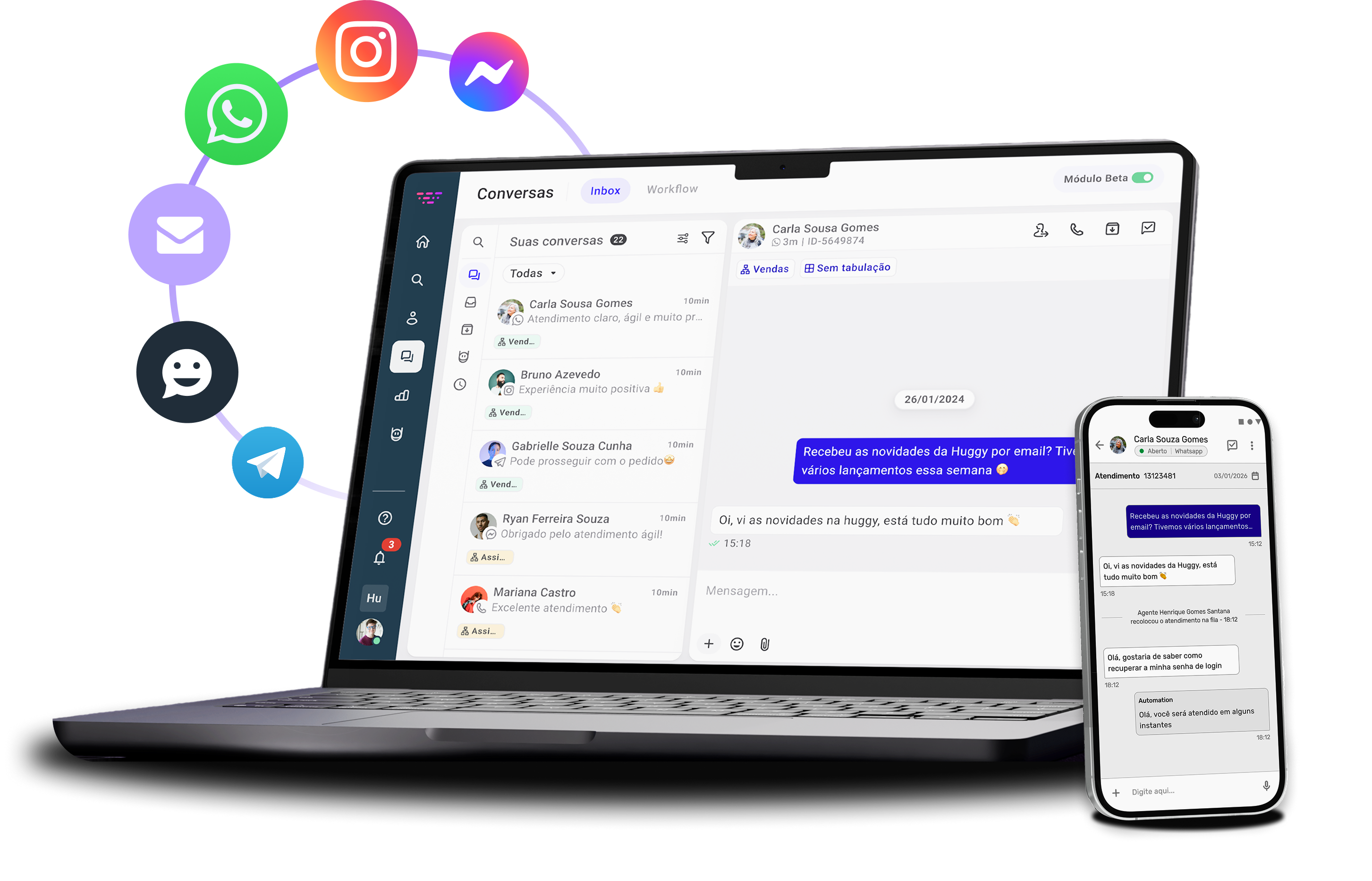
Digital customer service is the strategic relationship with customers in an efficient, customizable and scalable way, across connected digital channels such as WhatsApp, Instagram, live chat, etc. It centralizes data, automates interactions and offers convenience, allowing you to serve far more customers wherever, whenever and however they want.
24/7 availability
Your business never sleeps. Automatic replies at any time, including holidays and weekends.
Cost reduction
Automate up to 80% of repetitive interactions and reduce the team size needed for support.
Efficiency at scale
Serve thousands of customers simultaneously without losing quality or response time.
Data centralization
Unified history of all conversations and channels in a single view of the customer.ComparisonOnline Service vs. Digital Customer Service
Many companies believe that offering digital customer service just means having online contact points for customers. But at Huggy we understand the market has evolved and it's necessary to go further.Online service is the base and infrastructure; Digital Customer Service is the ideal strategy. See the difference:'%3e%3cpath%20d='M4.55116%207.10168C4.51024%206.94306%204.42756%206.79831%204.31173%206.68248C4.1959%206.56665%204.05115%206.48397%203.89253%206.44305L1.08066%205.71797C1.03268%205.70435%200.990459%205.67546%200.960394%205.63567C0.930329%205.59589%200.914062%205.54738%200.914062%205.49751C0.914062%205.44764%200.930329%205.39913%200.960394%205.35935C0.990459%205.31956%201.03268%205.29067%201.08066%205.27705L3.89253%204.55151C4.05109%204.51063%204.19581%204.42802%204.31163%204.31228C4.42746%204.19653%204.51016%204.05188%204.55116%203.89334L5.27624%201.08147C5.28972%201.03331%205.31858%200.990875%205.35843%200.960649C5.39827%200.930423%205.44691%200.914062%205.49693%200.914062C5.54694%200.914062%205.59558%200.930423%205.63542%200.960649C5.67527%200.990875%205.70414%201.03331%205.71761%201.08147L6.44224%203.89334C6.48316%204.05196%206.56583%204.19671%206.68166%204.31254C6.79749%204.42837%206.94225%204.51105%207.10086%204.55197L9.91274%205.27659C9.96109%205.28993%2010.0037%205.31876%2010.0341%205.35867C10.0645%205.39858%2010.081%205.44735%2010.081%205.49751C10.081%205.54767%2010.0645%205.59644%2010.0341%205.63635C10.0037%205.67626%209.96109%205.70509%209.91274%205.71843L7.10086%206.44305C6.94225%206.48397%206.79749%206.56665%206.68166%206.68248C6.56583%206.79831%206.48316%206.94306%206.44224%207.10168L5.71716%209.91355C5.70368%209.96171%205.67481%2010.0041%205.63497%2010.0344C5.59512%2010.0646%205.54648%2010.081%205.49647%2010.081C5.44646%2010.081%205.39782%2010.0646%205.35797%2010.0344C5.31812%2010.0041%205.28926%209.96171%205.27578%209.91355L4.55116%207.10168Z'%20stroke='%237549F8'%20stroke-width='0.916667'%20stroke-linecap='round'%20stroke-linejoin='round'/%3e%3cpath%20d='M9.16406%201.375V3.20833'%20stroke='%237549F8'%20stroke-width='0.916667'%20stroke-linecap='round'%20stroke-linejoin='round'/%3e%3cpath%20d='M10.0833%202.28906H8.25'%20stroke='%237549F8'%20stroke-width='0.916667'%20stroke-linecap='round'%20stroke-linejoin='round'/%3e%3cpath%20d='M1.83594%207.78906V8.70573'%20stroke='%237549F8'%20stroke-width='0.916667'%20stroke-linecap='round'%20stroke-linejoin='round'/%3e%3cpath%20d='M2.29167%208.25H1.375'%20stroke='%237549F8'%20stroke-width='0.916667'%20stroke-linecap='round'%20stroke-linejoin='round'/%3e%3c/g%3e%3cdefs%3e%3cclipPath%20id='clip0_13922_87621'%3e%3crect%20width='11'%20height='11'%20fill='white'/%3e%3c/clipPath%3e%3c/defs%3e%3c/svg%3e) Digital Customer Service Digital Customer Service
Digital Customer Service Digital Customer Service We're not just a chat tool. We're a growth engine for companies looking to move from basic online service to digital customer service with strategy.
How to apply Digital Customer Service tailored to your business?
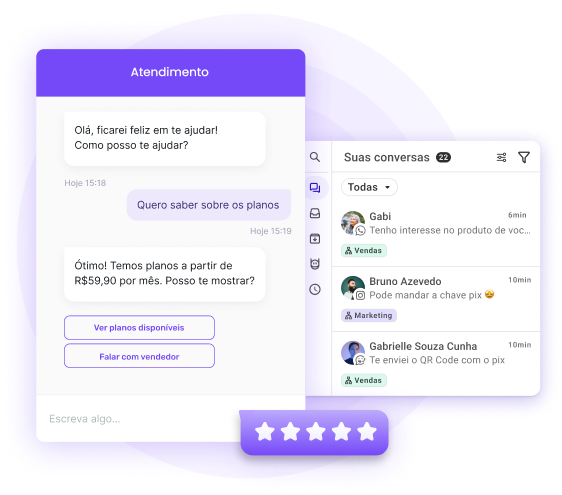
Every industry has specific communication pain points. See how intelligent digital customer service solves the main bottlenecks: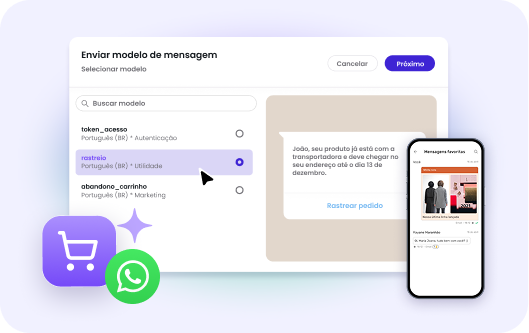
Digital customer service for retail and e-commerce
Challenge: Abandoned carts, repetitive shipping/tracking questions and demand spikes.Solution: ERP-integrated order status automation, proactive WhatsApp re-engagement messages and more.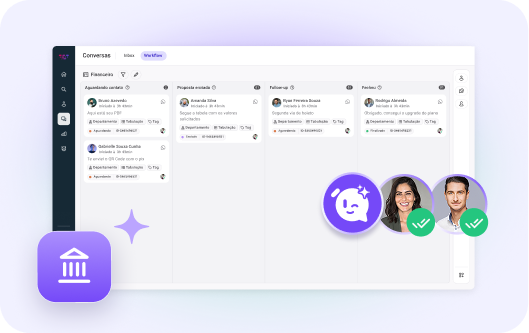
Digital customer service for finance and fintechs
Challenge: High demand, resending bills/invoices and the need for fast, secure screening.Solution: Secure API authentication directly in the conversation and intelligent virtual assistants for support.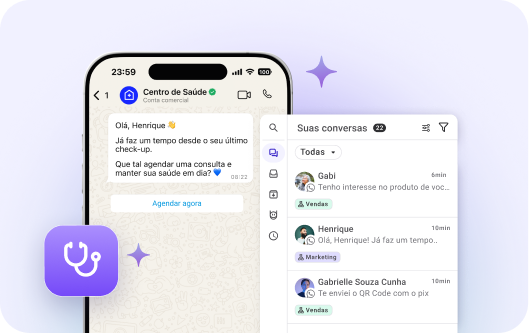
Digital customer service for healthcare (clinics, hospitals and labs)
Challenge: Complex appointment scheduling, slow manual confirmations and high no-show rates.Solution: Humanized automated scheduling, automatic reminder dispatches and appointment confirmation buttons.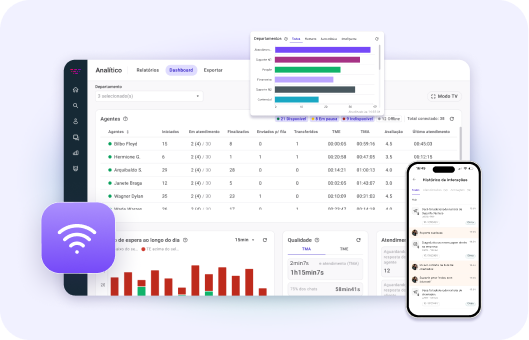
Digital customer service for telecom and internet providers (ISPs)
Challenge: High volume of basic technical support calls (like "I have no internet") overloading the call center.Solution: Fast chatbot diagnostics, instant PDF invoice delivery and automatic ticket opening.How to apply Digital Customer Service in practice?
For a digital customer service operation to be efficient, scalable and human at the same time, we've split it into three fundamental pillars:
Automatic Layer
This is where standardized automation acts. It resolves frequent questions, performs initial screening and delivers answers 24/7.

Intelligent Layer
Where Intelligence comes into play. It understands context, interprets complex intentions and personalizes the approach.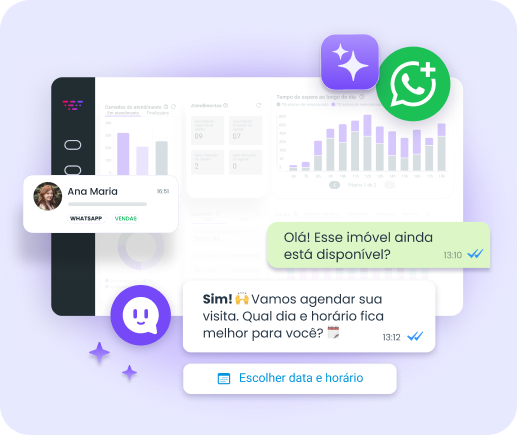

Human Layer
A human takes over when the issue requires sensitivity. The system transfers the customer to the agent, who already receives the full conversation history.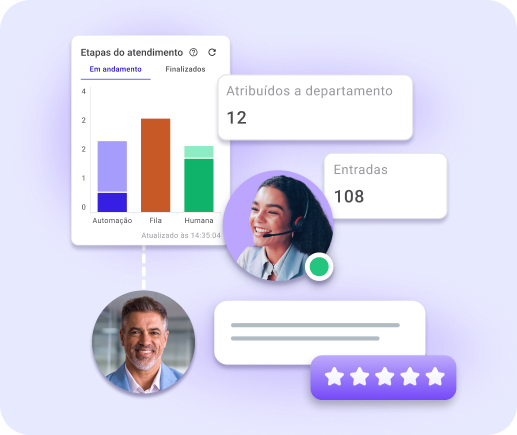 Official Meta Partner
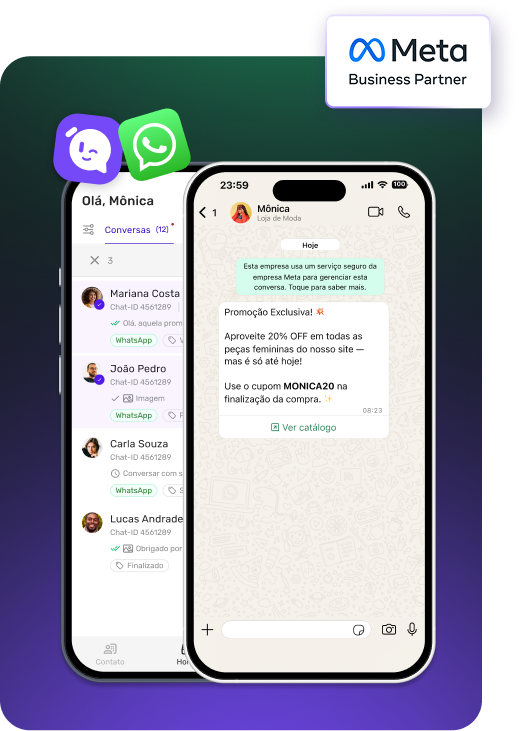
Bring Digital Customer Service to your company's WhatsApp

Fewer bans
Huggy is an Official Meta partner. That is why, by using WhatsApp + Huggy, your company gets more stability and security in customer service.'%3e%3cpath%20d='M7.75781%208.25781V32.9245C7.75781%2033.7422%208.08266%2034.5265%208.6609%2035.1047C9.23914%2035.683%2010.0234%2036.0078%2010.8411%2036.0078H35.5078'%20stroke='%2324C67F'%20stroke-width='3.08333'%20stroke-linecap='round'%20stroke-linejoin='round'/%3e%3cpath%20d='M30.8828%2029.8411V17.5078'%20stroke='%2324C67F'%20stroke-width='3.08333'%20stroke-linecap='round'%20stroke-linejoin='round'/%3e%3cpath%20d='M23.1797%2029.8437V11.3438'%20stroke='%2324C67F'%20stroke-width='3.08333'%20stroke-linecap='round'%20stroke-linejoin='round'/%3e%3cpath%20d='M15.4609%2029.8437V25.2188'%20stroke='%2324C67F'%20stroke-width='3.08333'%20stroke-linecap='round'%20stroke-linejoin='round'/%3e%3c/g%3e%3cdefs%3e%3cclipPath%20id='clip0_13922_89032'%3e%3crect%20width='39.7727'%20height='39.7727'%20fill='white'/%3e%3c/clipPath%3e%3c/defs%3e%3c/svg%3e)
More control and reports
Go beyond replying and broadcasting messages: check reports and dashboards to communicate with your customer more strategically.'%3e%3cpath%20d='M35.5078%2026.7578C35.5078%2027.5756%2035.183%2028.3598%2034.6047%2028.9381C34.0265%2029.5163%2033.2422%2029.8411%2032.4245%2029.8411H13.9245L7.75781%2036.0078V11.3411C7.75781%2010.5234%208.08266%209.73914%208.6609%209.1609C9.23914%208.58266%2010.0234%208.25781%2010.8411%208.25781H32.4245C33.2422%208.25781%2034.0265%208.58266%2034.6047%209.1609C35.183%209.73914%2035.5078%2010.5234%2035.5078%2011.3411V26.7578Z'%20stroke='%23BBA5FF'%20stroke-width='3.08333'%20stroke-linecap='round'%20stroke-linejoin='round'/%3e%3c/g%3e%3cdefs%3e%3cclipPath%20id='clip0_13922_89040'%3e%3crect%20width='39.7727'%20height='39.7727'%20fill='white'/%3e%3c/clipPath%3e%3c/defs%3e%3c/svg%3e)
More professional replies
Impress your customer with efficient automated messages, personalized and with standardized answers.Frequently asked questions about Digital Customer Service
Digital customer service is a support and relationship model that uses internet-connected channels to keep continuous, fluid and contextualized conversations with consumers.
Unlike traditional support, which treats every call or message as an isolated event with no memory, the digital format records the customer's history. This allows the company to know who the user is, what they have already bought and what their current need is even before the conversation starts.
In practice, it serves to follow the consumer in an integrated way throughout their entire buying journey, eliminating bureaucracy and long waiting queues.
When integrated with areas such as marketing, sales and logistics, this model stops being just a problem-solving area and starts acting as a strategic tool to generate new revenue and build customer loyalty.
In Online Customer Service, it is enough to be online and have profiles on social networks. The problem is that this is not necessarily a guarantee of efficiency. You may have a WhatsApp account for your company, but is it used to its full potential? Does it have reports for analysis? Are the main questions automated?
Therefore, the difference with Digital Customer Service is that it not only allows your company to be on several communication channels, but to make strategic use of each one of them, offering agility, personalization, a differentiated experience and, of course, serving many more customers and increasing the company's revenue.
The main advantage is the ability to scale operations without having to increase fixed costs in the same proportion.
By automating repetitive tasks and organizing message flows intelligently, the company reduces its dependence on new manual hires and is able to absorb sudden demand peaks without the support operation collapsing.
In addition, immediate access to the customer's context speeds up ticket resolution time.
Consumers get accurate answers in the very first interactions, which dramatically increases the perceived value of the brand, improves satisfaction rates and naturally unlocks new sales and repurchase opportunities.
Huggy is the most complete digital customer service platform, a pioneer in the industry and the creator of the concept, with more than 10 years of experience and success cases with renowned customers in several segments, in addition to easy onboarding and a complete API that makes it possible to integrate several systems and tools into the customer service journey.
The big difference lies in the communication flow and in information retention. Traditional customer service works under a linear and reactive logic: the consumer gets in touch, waits for an agent, explains their situation from scratch and, after the answer, the interaction is considered closed.
If the problem persists and they need to come back, the whole process repeats itself, generating frustration and rework for both sides.
Digital customer service, on the other hand, relies on asynchronous and integrated communication. The customer can send a message on WhatsApp, pause the conversation to handle their commitments and resume it hours later without losing progress or the chat history.
Data stays centralized, which removes the need to repeat basic information and allows the brand to anticipate solutions, making the experience much more agile and natural.
Omnichannel is a communication strategy that integrates all of a company's customer service channels (physical and digital) simultaneously and in a connected way, allowing the customer to switch channels without breaks in the experience or loss of history.
Implementation starts by centralizing customer service channels in a single platform, designing the flows for the most frequent questions into the automation layer and integrating the system with the CRM so that agents have the customer's history at hand.
No. It replaces mechanical and repetitive work. Digital customer service absorbs low-complexity demand so that human professionals can focus on deep connections, complex decision-making and closing deals.
The most effective model is the hybrid one, which combines the strengths of each of these technologies. Bot automations (chatbots) are ideal to filter the initial flow and solve repetitive questions, such as opening hours or delivery status.
The intelligent layer takes advantage of integrations to understand contexts and suggest quick replies to support agents and customers on a daily basis.
Meanwhile, human service is preserved for complex situations that require empathy and negotiation skills. Modern customer service platforms, such as Huggy, are designed precisely to make this transition invisible to the customer.
To operate in compliance and with security, it is essential to count on a platform committed to the LGPD (Brazilian General Data Protection Law), such as Huggy, to protect customer information against improper access and to keep channels like WhatsApp stable, reducing the risk of bans.
It is the official programming interface provided by Meta that allows companies to integrate WhatsApp with customer service platforms at scale (such as Huggy), reducing bans and ensuring authorized bulk message broadcasts, advanced automation and the verified account badge.
'/%3e%3cdefs%3e%3clinearGradient%20id='paint0_linear'%20x1='8.18676'%20y1='5.58962'%20x2='52.4792'%20y2='5.58962'%20gradientUnits='userSpaceOnUse'%3e%3cstop%20stop-color='%23FF0068'/%3e%3cstop%20offset='1'%20stop-color='%237549F8'/%3e%3c/linearGradient%3e%3c/defs%3e%3c/svg%3e)
Apply Digital Customer Service to your operation now